What Is a WAN?
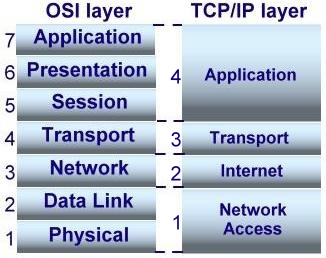
A WAN is a data communications network that covers a relatively broad geographic area and that often uses transmission facilities provided by common carriers, such as telephone companies. WAN technologies generally function at the lower three layers of the OSI reference model: the physical layer, the data link layer, and the network layer.
Figure: WAN Technologies Operate at the Lowest Levels of the OSI Model illustrates the relationship between the common WAN technologies and the OSI model.
Figure: WAN Technologies Operate at the Lowest Levels of the OSI Model

Point-to-Point Links
A point-to-point link provides a single, pre-established WAN communications path from the customer premises through a carrier network, such as a telephone company, to a remote network. Point-to-point lines are usually leased from a carrier and thus are often called leased lines. For a point-to-point line, the carrier allocates pairs of wire and facility hardware to your line only. These circuits are generally priced based on bandwidth required and distance between the two connected points. Point-to-point links are generally more expensive than shared services such as Frame Relay.
Figure: A Typical Point-to-Point Link Operates Through a WAN to a Remote Network illustrates a typical point-to-point link through a WAN.
Figure: A Typical Point-to-Point Link Operates Through a WAN to a Remote Network

Circuit Switching
Switched circuits allow data connections that can be initiated when needed and terminated when communication is complete. This works much like a normal telephone line works for voice communication. Integrated Services Digital Network (ISDN) is a good example of circuit switching. When a router has data for a remote site, the switched circuit is initiated with the circuit number of the remote network. In the case of ISDN circuits, the device actually places a call to the telephone number of the remote ISDN circuit. When the two networks are connected and authenticated, they can transfer data. When the data transmission is complete, the call can be terminated.
Figure: A Circuit-Switched WAN Undergoes a Process Similar to That Used for a Telephone Call illustrates an example of this type of circuit.
Figure: A Circuit-Switched WAN Undergoes a Process Similar to That Used for a Telephone Call

Packet Switching
Packet switching is a WAN technology in which users share common carrier resources. Because this allows the carrier to make more efficient use of its infrastructure, the cost to the customer is generally much better than with point-to-point lines. In a packet switching setup, networks have connections into the carrier's network, and many customers share the carrier's network. The carrier can then create virtual circuits between customers' sites by which packets of data are delivered from one to the other through the network. The section of the carrier's network that is shared is often referred to as a cloud.
Some examples of packet-switching networks include Asynchronous Transfer Mode (ATM), Frame Relay, Switched Multimegabit Data Services (SMDS), and X.25.
Figure: Packet Switching Transfers Packets Across a Carrier Network shows an example packet-switched circuit.
The virtual connections between customer sites are often referred to as a virtual circuit.
Figure: Packet Switching Transfers Packets Across a Carrier Network

WAN Virtual Circuits
A virtual circuit is a logical circuit created within a shared network between two network devices. Two types of virtual circuits exist: switched virtual circuits (SVCs) and permanent virtual circuits (PVCs).
SVCs are virtual circuits that are dynamically established on demand and terminated when transmission is complete. Communication over an SVC consists of three phases: circuit establishment, data transfer, and circuit termination. The establishment phase involves creating the virtual circuit between the source and destination devices. Data transfer involves transmitting data between the devices over the virtual circuit, and the circuit termination phase involves tearing down the virtual circuit between the source and destination devices. SVCs are used in situations in which data transmission between devices is sporadic, largely because SVCs increase bandwidth used due to the circuit establishment and termination phases, but they decrease the cost associated with constant virtual circuit availability.
PVC is a permanently established virtual circuit that consists of one mode: data transfer. PVCs are used in situations in which data transfer between devices is constant. PVCs decrease the bandwidth use associated with the establishment and termination of virtual circuits, but they increase costs due to constant virtual circuit availability. PVCs are generally configured by the service provider when an order is placed for service.
WAN Dialup Services
Dialup services offer cost-effective methods for connectivity across WANs. Two popular dialup implementations are dial-on-demand routing (DDR) and dial backup.
DDR is a technique whereby a router can dynamically initiate a call on a switched circuit when it needs to send data. In a DDR setup, the router is configured to initiate the call when certain criteria are met, such as a particular type of network traffic needing to be transmitted. When the connection is made, traffic passes over the line. The router configuration specifies an idle timer that tells the router to drop the connection when the circuit has remained idle for a certain period.
Dial backup is another way of configuring DDR. However, in dial backup, the switched circuit is used to provide backup service for another type of circuit, such as point-to-point or packet switching. The router is configured so that when a failure is detected on the primary circuit, the dial backup line is initiated. The dial backup line then supports the WAN connection until the primary circuit is restored. When this occurs, the dial backup connection is terminated.
WAN Devices
WANs use numerous types of devices that are specific to WAN environments. WAN switches, access servers, modems, CSU/DSUs, and ISDN terminal adapters are discussed in the following sections. Other devices found in WAN environments that are used in WAN implementations include routers, ATM switches, and multiplexers.
WAN Switch
A WAN switch is a multiport internetworking device used in carrier networks. These devices typically switch such traffic as Frame Relay, X.25, and SMDS, and operate at the data link layer of the OSI reference model.
Figure: Two Routers at Remote Ends of a WAN Can Be Connected by WAN Switches illustrates two routers at remote ends of a WAN that are connected by WAN switches.
Figure: Two Routers at Remote Ends of a WAN Can Be Connected by WAN Switches

Access Server
An access server acts as a concentration point for dial-in and dial-out connections.
Figure: An Access Server Concentrates Dial-Out Connections into a WANillustrates an access server concentrating dial-out connections into a WAN.
Figure: An Access Server Concentrates Dial-Out Connections into a WAN

Modem
A modem is a device that interprets digital and analog signals, enabling data to be transmitted over voice-grade telephone lines. At the source, digital signals are converted to a form suitable for transmission over analog communication facilities. At the destination, these analog signals are returned to their digital form.
Figure: A Modem Connection Through a WAN Handles Analog and Digital Signals illustrates a simple modem-to-modem connection through a WAN.
Figure: A Modem Connection Through a WAN Handles Analog and Digital Signals

CSU/DSU
A channel service unit/digital service unit (CSU/DSU) is a digital-interface device used to connect a router to a digital circuit like a T1. The CSU/DSU also provides signal timing for communication between these devices.
Figure: The CSU/DSU Stands Between the Switch and the Terminal illustrates the placement of the CSU/DSU in a WAN implementation.
Figure: The CSU/DSU Stands Between the Switch and the Terminal

ISDN Terminal Adapter
An ISDN terminal adapter is a device used to connect ISDN Basic Rate Interface (BRI) connections to other interfaces, such as EIA/TIA-232 on a router. A terminal adapter is essentially an ISDN modem, although it is called a terminal adapter because it does not actually convert analog to digital signals.
Figure: The Terminal Adapter Connects the ISDN Terminal Adapter to Other Interfaces illustrates the placement of the terminal adapter in an ISDN environment.
Figure: The Terminal Adapter Connects the ISDN Terminal Adapter to Other Interfaces

 The left number state how many units to move the shape right (positive number) or left (negative number). The right number states how many units to move the shape up (positive number) or down (negative number).